
|
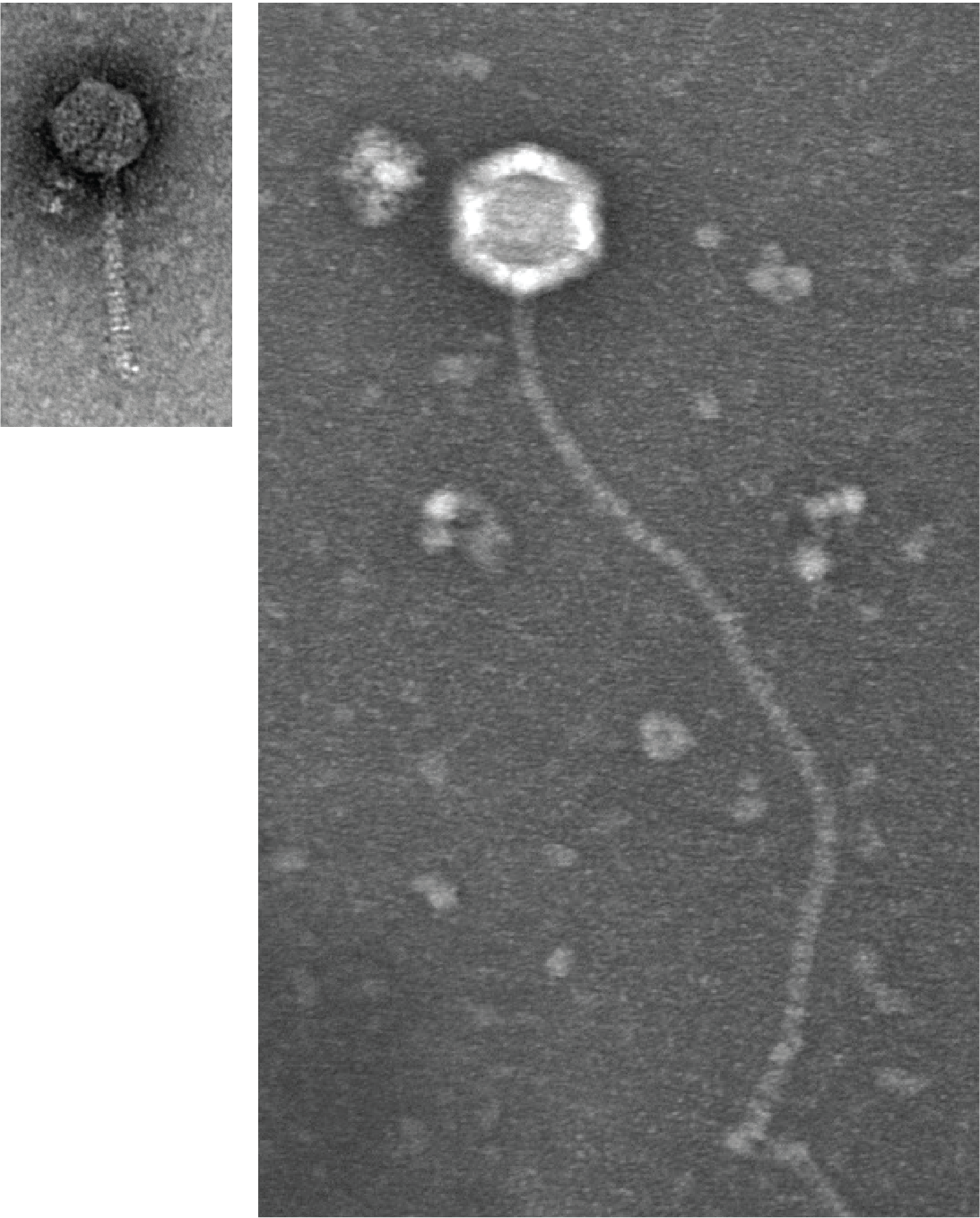
Research Phages are viruses that infect and kill bacteria and are among the most abundant entities on the planet. Through constant predation, phages exert huge evolutionary pressures on their bacterial hosts, influencing bacterial cell biology, microbial communities, and global geochemical cycles. The bacterial cell surface is a dominant factor that dictates the outcome of phage infection by determining phage host range and affecting the efficient release of phage progeny. Bacterial cell envelopes are multilayered structures that prevent osmotic lysis, dictate cell shape, act as a permeability barrier, and serve as the interface with the environment and host immune systems. |
 |
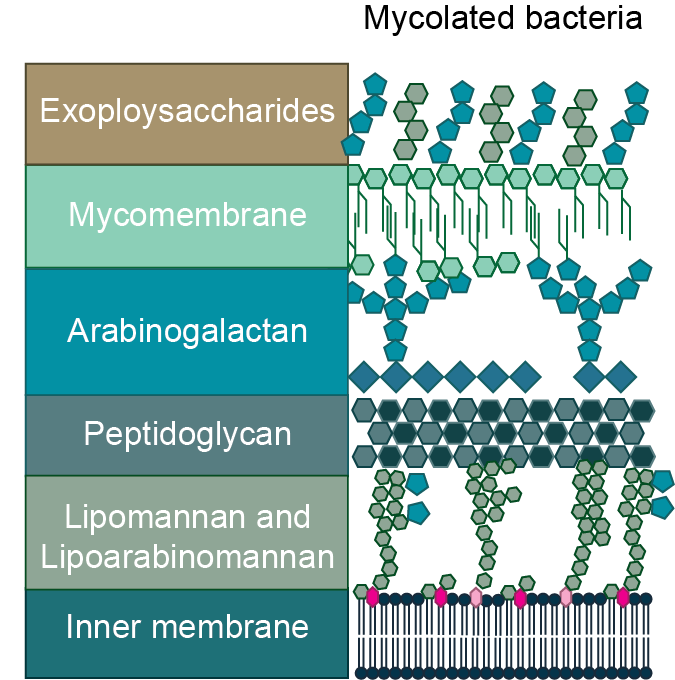
Bacteria from the order Mycobacteriales include several medically important pathogens such as Mycobacterium tuberculosis and Corynebacterium diphtheriae, the causative agents of tuberculosis and diphtheria, as well as the industrial workhorse and model system Corynebacterium glutamicum (Cglu). These bacteria are characterized by a particularly complex cell envelope, including a unique outer membrane called the mycomembrane, that limits the permeability of antibiotics but also serves as an attractive target for the development of novel therapeutic interventions.
 |
The McKitterick Lab address how mycolated bacteria assemble their envelope through engagement with phages in three main areas. First, through phage engagement with bacterial surface receptors as a method to understand evolution, synthesis, and transport of envelope components across the unique mycolated envelope. Second, by analysis and characterization of phage lysis gene function to uncover how these phages specifically have evolved to target and destroy mycolated envelopes. And finally, through co-isolation of phages and mycolated hosts from to understand how phage predation drives mycolated envelope evolution in ecologically and medically relevant contexts and influences human health and disease. |